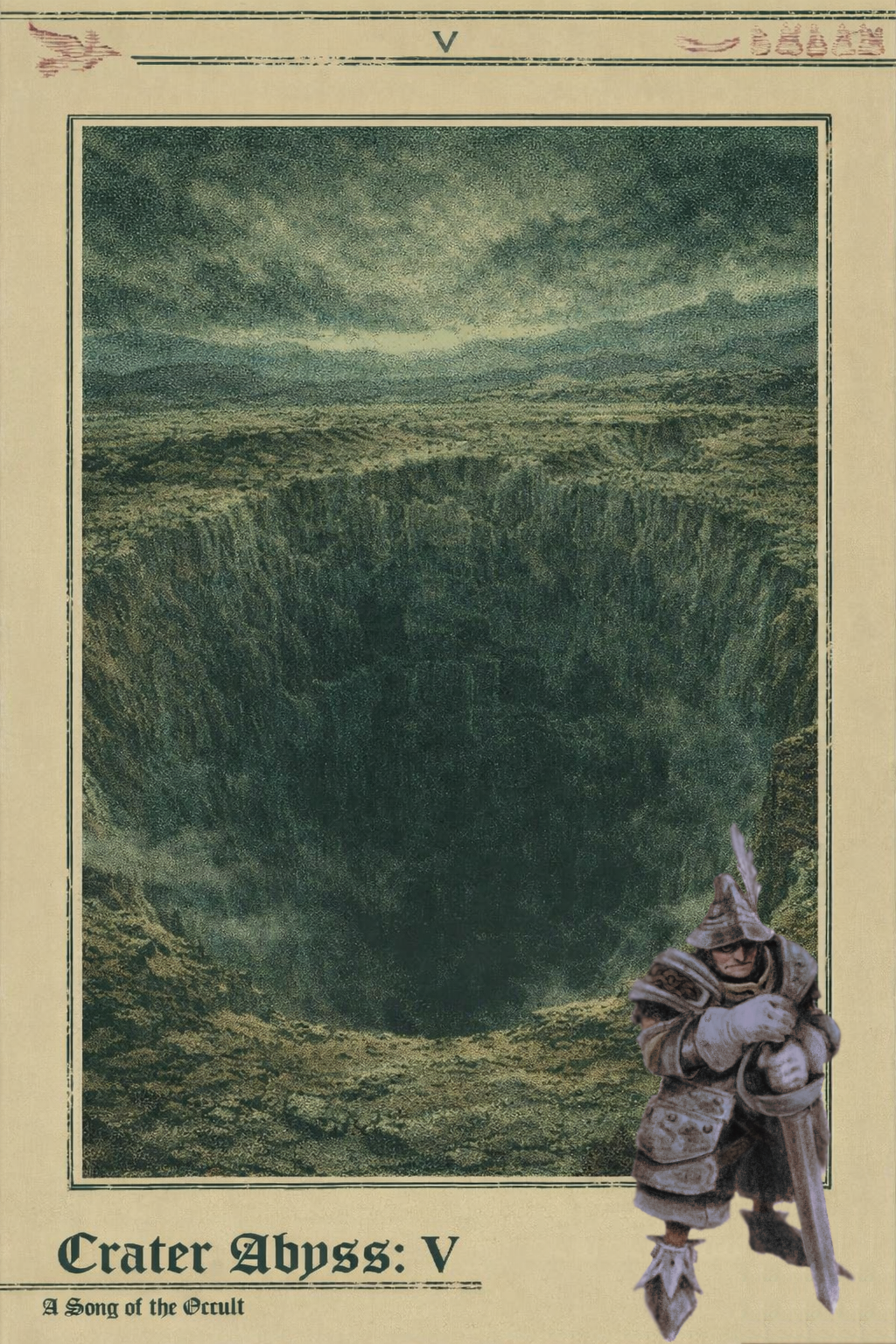

Crater Abyss: [Episode V - A Song of the Hidden]
1d20 = 15
"Long before the kingdoms whose names now fill the maps existed, before men raised walls or sages learned to measure the passage of seasons, there was an era so remote that even the stones seem to have forgotten it. The elders tell that in those days the world was different, not because its mountains were different or because the seas occupied different shores, but because existence itself seemed to breathe in a different way. Winters lasted entire generations, forests grew to hide the horizon, and storms could remain over the same region for years without moving a single step. It was a time when creatures were born, lived, and died without ever understanding who truly ruled over them, for the power of the Archking Generalissimo Demon was so ancient that it seemed to be part of the natural laws of the world. Just as no one questions the existence of the sea or the arrival of night, no one questioned his dominion. He had been there since before memories, since before genealogies, since before the first songs."
"The tales describe him as a tyrant of inconceivable cruelty, but also as a figure so immense that it is impossible to distinguish where the ruler ended and his empire began. His fortresses spanned entire continents, his armies numbered in the trillions, and the three great slave races lived under a servitude that had lasted so long that many had forgotten even the idea of freedom. Children were born slaves, grew old as slaves, and died as slaves, while their grandchildren inherited the same chains. However, the old tales contain a strange contradiction that storytellers often mention without dwelling on it too much. If the Archking was as powerful as the legends tell, if he truly ruled over all known creation, then why did the world still exist? Why did cities keep growing? Why did rivers keep flowing and peoples keep multiplying under his shadow?."
>Pappipon the Chronicler.
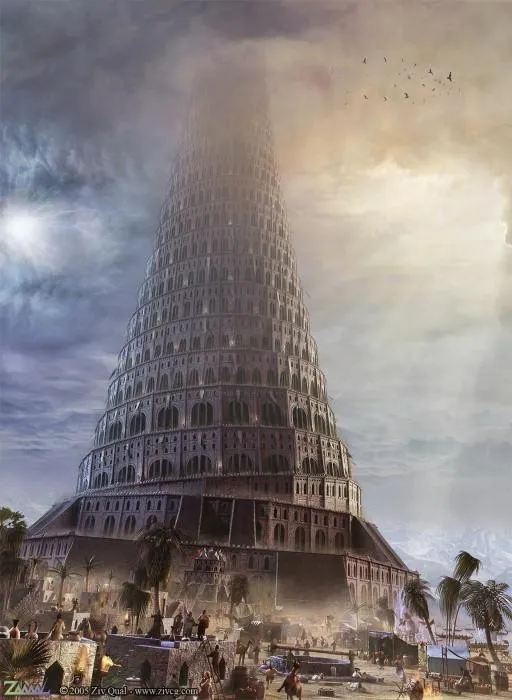
https://youtu.be/7zwbAWq5HoE ▶The wind descended from the northern mountain ranges, carrying with it the cold of snows so ancient that no kingdom remembered when they had begun to cover those peaks. It flowed down the gray stone slopes, passed through coniferous forests whose trunks seemed like columns holding up the sky, and finally spread over the immense steppes that occupied the heart of the continent. There, the grasses swayed, forming yellow waves under the golden light of dawn, all leaning in the same direction as if obeying a silent will. From a distance, that vegetal ocean seemed infinite, broken only by dirt roads, small walled settlements, and the long columns of smoke left by caravans crossing the vast plains. However, none of that truly captured the gaze. Every traveler, every shepherd, every merchant, and every king ended up observing the same point on the horizon. There, where the land seemed to touch the heavens, stood a structure so colossal that it was impossible to calculate its size. A black tower, wider than many cities, pierced the clouds and disappeared among them, rising to heights where not even birds dared to fly. For countless generations, that mass had dominated the landscape. The living were born in its shadow, grew old watching it from afar, and died without ever understanding who had built it or for what purpose. It was so ancient that many considered it part of nature itself, as inevitable as the mountains or the seas.
"Slaves were born seeing that silhouette. Slaves died seeing that silhouette. And their children did the same. Its presence was so ancient that no one remembered a world without it."
As the wind continued to sweep across the steppes, something else began to stir. Animals were the first to notice. Large herds abandoned territories where they had remained for centuries. Birds altered migratory routes known since time immemorial. Wolves howled for entire nights, staring at clear skies where there was no moon. Fishermen returned terrified, claiming the sea remained motionless for hours, as if something gigantic were breathing beneath its waters. The elders began to have identical dreams. They dreamed of distant trumpets echoing beyond the clouds, of roots stirring beneath the earth, and of something immense moving in the darkness of a place no man had ever seen. The wise debated. The priests performed sacrifices. The rulers sent messengers. No one could understand what these omens meant. Meanwhile, the three great slave nations continued to do the only thing they had done for centuries: hate each other.
"Like idiots, we hated each other just like before."
Fortresses burned on the borders. Slaves died defending mountains whose names would be forgotten a generation later. Disputes over rivers, mines, and trade routes consumed thousands of lives each year. The slave kings exchanged threats, alliances, and betrayals while, above them all, the Archking Generalissimo Demon continued to rule, his authority extending over the entire world as naturally as winter spreads over the land when its season arrives. No one truly questioned his dominion. Some hated him. Others revered him. Most simply accepted that he had always been there. Fathers taught their children stories of his conquests in the same way they taught them the names of the stars or the course of rivers. It was a reality so ancient that it had ceased to seem like a choice.
Then the skies changed.
It didn't happen all at once. First, the stars disappeared for one night. Then, luminous cracks appeared between the clouds. Later, the trumpets arrived. Their sound swept across entire continents without anyone being able to pinpoint their origin. It didn't sound like a melody. It didn't sound like music. It sounded like a warning. Like the announcement of something inevitable. The oceans began to churn. The mountains trembled. Even the great Tower seemed to cast a different shadow under the sunlight. And then happened that which no chronicler managed to describe adequately. The firmament split open. Not like a storm breaking the clouds or lightning tearing the air. It was more like a wound, like a mirror shattering. An impossible fracture spreading across the sky. From that opening descended a single hand of light whose magnitude defied all comprehension. The slaves fell to their knees. The animals fled. The priests wept. And the hand pointed to three specific individuals in different parts of the world.
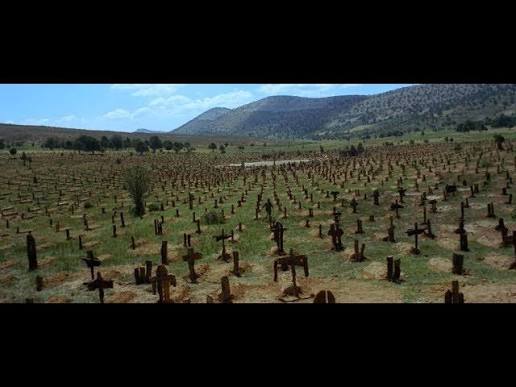
"What they received that day, no one knows for sure. The tales speak of a Soul. The temples speak of a blessing. The songs speak of a strength.... But others say they were simply more chains. But whatever the truth, something changed within them. The slaves began to lift their heads. The peoples began to remember grievances they had endured for generations. Resignation vanished. In its place appeared a fierce will that spread through cities, villages, and fortresses like a fire fueled by centuries of accumulated suffering. Thunder rumbled over the steppes. Hundreds of kilometers away, entire armies advanced. Millions of steps. Millions of spears. Millions of men convinced they understood what they were fighting for. Banners waved under blackened skies. Bonfires lit the nights. Thus began the rebellion. The following decades transformed the world into an immense tomb. Fields were covered with corpses. Walls crumbled. Entire forests disappeared under fire. Rivers carried more bodies than vessels. Every victory cost thousands of lives. Every defeat demanded even more sacrifices. Children grew up hearing the sound of war drums. The elderly died without ever knowing peace. Yet, generation after generation, the armies advanced. Slowly. Painfully. Like a tide impossible to stop."
"Each victory demanded a greater one. Each defeat justified a worse one. Entire cities disappeared under fire. Ancient forests were turned to ash. The oceans filled with the wreckage of fleets so vast they seemed like continents floating on the waves. And still they continued to advance. Step by step. Death after death. Oath after oath. The war dragged on for entire generations. Many of the soldiers who left at the beginning never lived to see the outcome. It was their children and their children's children who continued to fight. And when finally the three kings reached the heart of the enemy empire, they found the Archking waiting."
1d20 = 15
"Long before the kingdoms whose names now fill the maps existed, before men raised walls or sages learned to measure the passage of seasons, there was an era so remote that even the stones seem to have forgotten it. The elders tell that in those days the world was different, not because its mountains were different or because the seas occupied different shores, but because existence itself seemed to breathe in a different way. Winters lasted entire generations, forests grew to hide the horizon, and storms could remain over the same region for years without moving a single step. It was a time when creatures were born, lived, and died without ever understanding who truly ruled over them, for the power of the Archking Generalissimo Demon was so ancient that it seemed to be part of the natural laws of the world. Just as no one questions the existence of the sea or the arrival of night, no one questioned his dominion. He had been there since before memories, since before genealogies, since before the first songs."
"The tales describe him as a tyrant of inconceivable cruelty, but also as a figure so immense that it is impossible to distinguish where the ruler ended and his empire began. His fortresses spanned entire continents, his armies numbered in the trillions, and the three great slave races lived under a servitude that had lasted so long that many had forgotten even the idea of freedom. Children were born slaves, grew old as slaves, and died as slaves, while their grandchildren inherited the same chains. However, the old tales contain a strange contradiction that storytellers often mention without dwelling on it too much. If the Archking was as powerful as the legends tell, if he truly ruled over all known creation, then why did the world still exist? Why did cities keep growing? Why did rivers keep flowing and peoples keep multiplying under his shadow?."
>Pappipon the Chronicler.
https://youtu.be/7zwbAWq5HoE
▶The wind descended from the northern mountain ranges, carrying with it the cold of snows so ancient that no kingdom remembered when they had begun to cover those peaks. It flowed down the gray stone slopes, passed through coniferous forests whose trunks seemed like columns holding up the sky, and finally spread over the immense steppes that occupied the heart of the continent. There, the grasses swayed, forming yellow waves under the golden light of dawn, all leaning in the same direction as if obeying a silent will. From a distance, that vegetal ocean seemed infinite, broken only by dirt roads, small walled settlements, and the long columns of smoke left by caravans crossing the vast plains. However, none of that truly captured the gaze. Every traveler, every shepherd, every merchant, and every king ended up observing the same point on the horizon. There, where the land seemed to touch the heavens, stood a structure so colossal that it was impossible to calculate its size. A black tower, wider than many cities, pierced the clouds and disappeared among them, rising to heights where not even birds dared to fly. For countless generations, that mass had dominated the landscape. The living were born in its shadow, grew old watching it from afar, and died without ever understanding who had built it or for what purpose. It was so ancient that many considered it part of nature itself, as inevitable as the mountains or the seas."Slaves were born seeing that silhouette. Slaves died seeing that silhouette. And their children did the same. Its presence was so ancient that no one remembered a world without it."
As the wind continued to sweep across the steppes, something else began to stir. Animals were the first to notice. Large herds abandoned territories where they had remained for centuries. Birds altered migratory routes known since time immemorial. Wolves howled for entire nights, staring at clear skies where there was no moon. Fishermen returned terrified, claiming the sea remained motionless for hours, as if something gigantic were breathing beneath its waters. The elders began to have identical dreams. They dreamed of distant trumpets echoing beyond the clouds, of roots stirring beneath the earth, and of something immense moving in the darkness of a place no man had ever seen. The wise debated. The priests performed sacrifices. The rulers sent messengers. No one could understand what these omens meant. Meanwhile, the three great slave nations continued to do the only thing they had done for centuries: hate each other.
"Like idiots, we hated each other just like before."
Fortresses burned on the borders. Slaves died defending mountains whose names would be forgotten a generation later. Disputes over rivers, mines, and trade routes consumed thousands of lives each year. The slave kings exchanged threats, alliances, and betrayals while, above them all, the Archking Generalissimo Demon continued to rule, his authority extending over the entire world as naturally as winter spreads over the land when its season arrives. No one truly questioned his dominion. Some hated him. Others revered him. Most simply accepted that he had always been there. Fathers taught their children stories of his conquests in the same way they taught them the names of the stars or the course of rivers. It was a reality so ancient that it had ceased to seem like a choice.
Then the skies changed.
It didn't happen all at once. First, the stars disappeared for one night. Then, luminous cracks appeared between the clouds. Later, the trumpets arrived. Their sound swept across entire continents without anyone being able to pinpoint their origin. It didn't sound like a melody. It didn't sound like music. It sounded like a warning. Like the announcement of something inevitable. The oceans began to churn. The mountains trembled. Even the great Tower seemed to cast a different shadow under the sunlight. And then happened that which no chronicler managed to describe adequately. The firmament split open. Not like a storm breaking the clouds or lightning tearing the air. It was more like a wound, like a mirror shattering. An impossible fracture spreading across the sky. From that opening descended a single hand of light whose magnitude defied all comprehension. The slaves fell to their knees. The animals fled. The priests wept. And the hand pointed to three specific individuals in different parts of the world.
"What they received that day, no one knows for sure. The tales speak of a Soul. The temples speak of a blessing. The songs speak of a strength.... But others say they were simply more chains. But whatever the truth, something changed within them. The slaves began to lift their heads. The peoples began to remember grievances they had endured for generations. Resignation vanished. In its place appeared a fierce will that spread through cities, villages, and fortresses like a fire fueled by centuries of accumulated suffering. Thunder rumbled over the steppes. Hundreds of kilometers away, entire armies advanced. Millions of steps. Millions of spears. Millions of men convinced they understood what they were fighting for. Banners waved under blackened skies. Bonfires lit the nights. Thus began the rebellion. The following decades transformed the world into an immense tomb. Fields were covered with corpses. Walls crumbled. Entire forests disappeared under fire. Rivers carried more bodies than vessels. Every victory cost thousands of lives. Every defeat demanded even more sacrifices. Children grew up hearing the sound of war drums. The elderly died without ever knowing peace. Yet, generation after generation, the armies advanced. Slowly. Painfully. Like a tide impossible to stop."
"Each victory demanded a greater one. Each defeat justified a worse one. Entire cities disappeared under fire. Ancient forests were turned to ash. The oceans filled with the wreckage of fleets so vast they seemed like continents floating on the waves. And still they continued to advance. Step by step. Death after death. Oath after oath. The war dragged on for entire generations. Many of the soldiers who left at the beginning never lived to see the outcome. It was their children and their children's children who continued to fight. And when finally the three kings reached the heart of the enemy empire, they found the Archking waiting."